
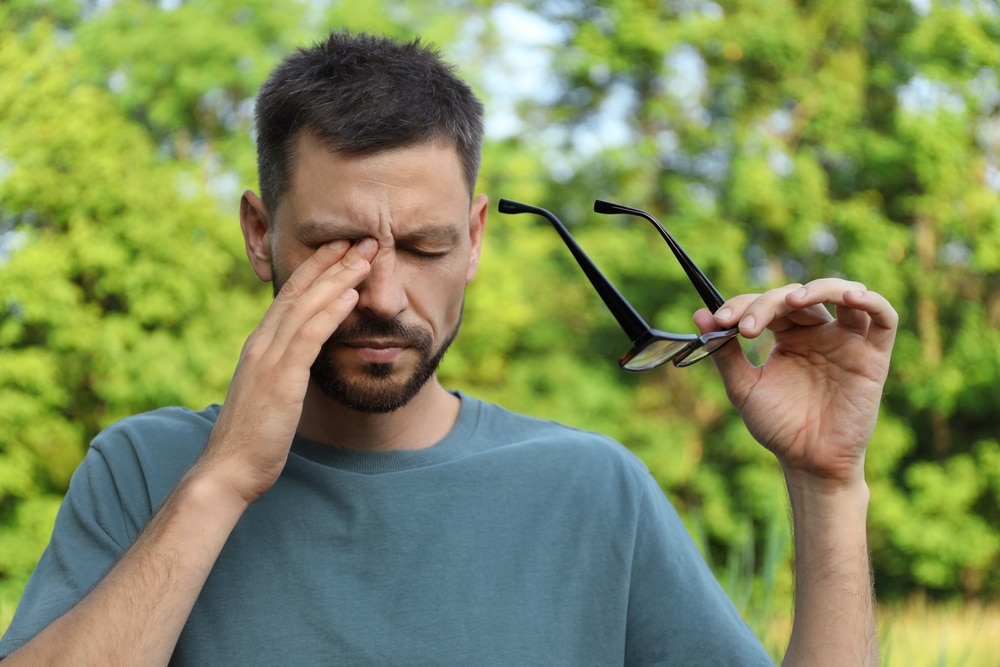
If your eyes feel dry, irritated, or watery throughout the year (or only during certain seasons) you may wonder whether you’re dealing with allergies or chronic dry eye disease. While these conditions can cause similar symptoms, they have different underlying causes and often require different treatments. Understanding the difference is the first step toward finding lasting relief.
At the practice of Dr. W. John Murrell in Amarillo, TX, every dry eye evaluation is focused on identifying the source of your symptoms, not simply masking them. As a board-certified Ophthalmologist and fellowship-trained Oculoplastic Surgeon with more than 30 years of experience, Dr. Murrell uses advanced diagnostic technology to develop personalized treatment plans that improve both comfort and long-term eye health.
Signs Your Dry Eye May Be Seasonal
Seasonal dry eye symptoms are often triggered by environmental factors such as pollen, wind, low humidity, or temperature changes. During allergy season, inflammation can make your eyes feel dry even if they’re producing excess tears.
You may be experiencing seasonal dry eye if you notice:
- Itchy or watery eyes
- Mild redness
- Burning or irritation after spending time outdoors
- Symptoms that improve when the season changes
Air conditioning, heaters, and dry climates can also temporarily worsen these symptoms.
Signs You May Have Chronic Dry Eye
If your symptoms persist throughout the year or keep returning regardless of the season, you may have chronic dry eye. One of the most common causes is Meibomian Gland Dysfunction (MGD), which prevents the tear film’s oil layer from functioning properly. Without enough healthy oil, tears evaporate too quickly, leaving your eyes dry and irritated.
Common signs include:
- A gritty or sandy sensation
- Blurry vision that improves after blinking
- Light sensitivity
- Eye fatigue while reading or using digital devices
- Frequent dependence on artificial tears
Without treatment, chronic dry eye can become progressively more uncomfortable and may affect the health of your ocular surface.
Advanced Dry Eye Treatment Options
The most effective treatment depends on what’s causing your dry eye. If Dr. Murrell determines that blocked Meibomian glands are contributing to your symptoms, he may recommend advanced treatments such as LipiFlow®, which uses controlled heat and gentle pulsation to clear gland blockages, or Envision™, an energy-based platform designed to improve Meibomian gland function and reduce inflammation around the eyelids. These technologies target the underlying cause of evaporative dry eye rather than simply providing temporary symptom relief.
Find Lasting Dry Eye Relief in Amarillo, TX
You don’t have to guess why your eyes feel dry or irritated. Whether your symptoms are seasonal, chronic, or a combination of both, Dr. Murrell can identify the cause and recommend the treatment that’s right for you.
Contact (806) 351-1177 to request an appointment with our team in Amarillo, TX.