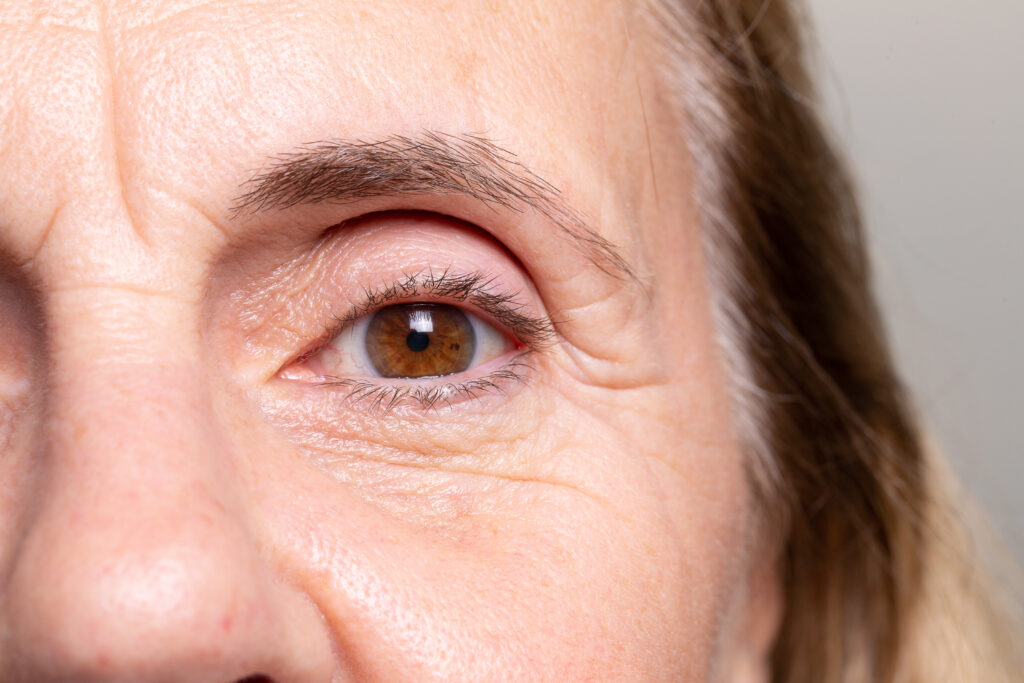
If you’ve noticed that one or both of your upper eyelids seem to be drooping more than they used to, you may be experiencing ptosis. In many cases, particularly when ptosis develops with age, the condition can gradually worsen over time. As your eyelid drops farther, what began as a cosmetic concern may eventually interfere with your vision.
At his practice in Amarillo, TX, Dr. W. John Murrell evaluates and treats ptosis with careful attention to both eyelid function and appearance. As a board-certified ophthalmologist and fellowship-trained oculoplastic surgeon with more than 30 years of experience, Dr. Murrell can determine why your eyelid is drooping and whether treatment is appropriate.
Why Can Ptosis Become More Noticeable?
Your upper eyelid is lifted primarily by the levator muscle. With age, the connection between this muscle and your eyelid can stretch or weaken, causing the eyelid to sit lower than it once did. Because these age-related changes can continue, ptosis may become increasingly noticeable over the years.
Ptosis can also have other causes, including nerve or muscle problems, trauma, and previous eye surgery. That’s why determining the cause is an important part of your evaluation.
How Can Worsening Ptosis Affect You?
Mild ptosis may initially change only the appearance of your eyes. As the eyelid moves lower, however, it can begin obstructing your upper field of vision.
You might compensate without realizing it. For example, you may:
- Raise your eyebrows to lift your eyelids
- Tilt your head backward to see more clearly
- Experience forehead fatigue from constantly engaging your brow muscles
- Have increasing difficulty with activities that depend on a clear visual field
These changes are good reasons to have your eyelids professionally evaluated rather than assuming drooping is simply a cosmetic part of aging.
When Should You Seek Care?
Gradual changes deserve evaluation, but sudden ptosis requires prompt medical attention. An eyelid that begins drooping unexpectedly over hours or days can sometimes indicate an underlying neurological or other medical problem.
For slowly progressing ptosis, Dr. Murrell can assess your eyelid position and muscle function and determine whether it affects your vision.
Does Worsening Ptosis Require Surgery?
Not every case requires immediate treatment. If your ptosis is mild and doesn’t bother you or interfere with your vision, monitoring may be appropriate.
When drooping becomes significant, ptosis repair can tighten or reposition the structures that raise your eyelid. If excess upper eyelid skin is also present, Dr. Murrell can determine whether that concern should be addressed as part of your surgical plan.
To have worsening ptosis in Amarillo, TX evaluated, call (806) 351-1177 to schedule a consultation with Dr. W. John Murrell.